Picacho-Salton: Gold on the Edge of the Mesquite District
A cluster of lode and placer claims in Imperial County sits beside one of California's few operating gold mines. Geography is doing a lot of work here.
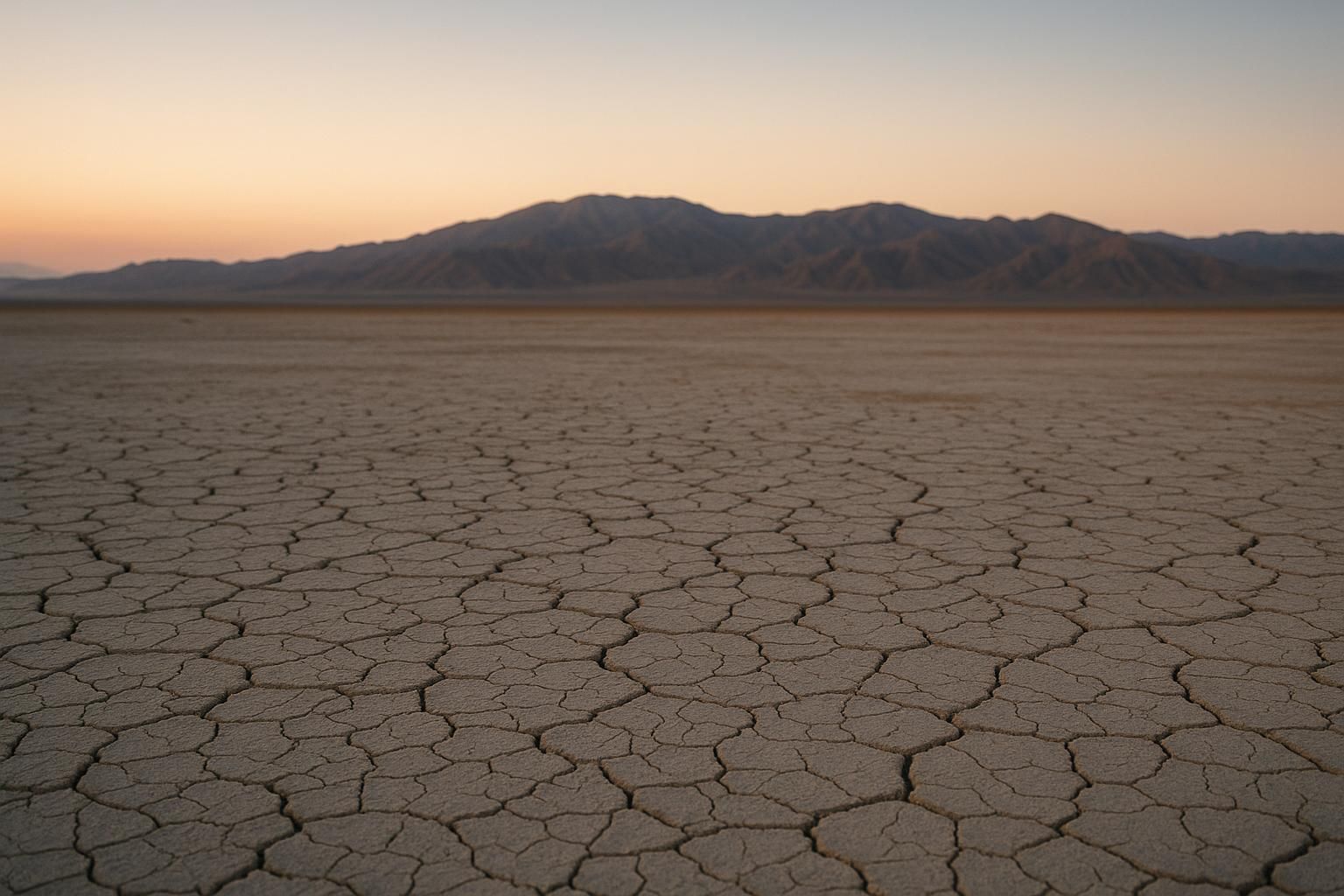
California is not the first place most investors picture when they think about modern gold mining, but the southeast corner of the state tells a different story. Imperial County, out toward the Arizona line and the Salton Sea, hosts the Mesquite Mine, one of the few sizable open-pit gold operations in California. The Picacho-Salton project is a cluster of precious-metal claims in that same neighborhood, in the Mesquite Mining District, and its whole case starts with where it sits.
The property is modest in size compared with the sprawling claim blocks common in Nevada and Arizona: a reported group of roughly two dozen unpatented lode and placer claims covering close to two thousand acres. In exploration, location can matter as much as scale. A small position inside a productive district can be worth more than a large one in dead ground.
- Location
- Mesquite Mining District, Imperial County, California
- Setting
- Near the Mesquite Mine, an operating open-pit gold mine
- Claim position
- Reported at about 21 unpatented lode and placer claims, roughly 1,960 acres
- Target metals
- Gold, with precious-metal credits
- Stage
- Exploration; no declared reserves
The Mesquite District matters
The Mesquite Mine has poured gold for decades and has changed hands among serious operators, which tells you the district hosts real, mineable ounces. Deposits there are broadly the disseminated, oxidized type that suits heap-leach mining: gold spread through altered rock at grades low enough that the rock has to be moved in bulk and cheap enough that it still pays. That style is forgiving on grade and punishing on cost, which shapes what any nearby project would need to prove.
For a claim group like Picacho-Salton, the district context sets the exploration thesis. The question is not whether gold exists in the region, it plainly does, but whether this particular ground hosts enough of it, in the right form, to matter. Sitting next to a mine raises the odds that the geology is present. It does not deliver a deposit.
A note on the name
Southeast California is dense with gold history, and place names get reused. The historic Picacho mine district sits along the Colorado River in the same broad region, and the Salton Sea anchors the basin to the northwest. A project name that stitches those landmarks together is describing a footprint in gold-bearing country, not a single famous orebody. Read the claims and the maps, not the branding.
Oxide gold and why it changes the math
Oxidized, near-surface gold is attractive to explorers because it can often be recovered by heap leaching, the lowest-cost way to pull gold from low-grade rock. That lowers the grade a project needs to be viable, but it raises the importance of metallurgy, water, and scale. A California project also carries a heavier permitting and environmental load than the same rock would in Nevada. Cheap ounces in the ground can still be expensive ounces to permit and produce.
In a district like Mesquite, the geology is the easy part. Cost, water, and permitting decide whether ounces become a mine.
What to watch, and what to discount
The useful signals are the same ones that matter anywhere: real sampling and drill data, disclosed grades and widths, and a technical study a reader can check. Discount the two things promoters lean on hardest, raw acreage and proximity to a famous mine, because neither one is a resource. A skeptical reader can cross-check district geology and past workings through the U.S. Geological Survey's mineral resources database and land status through Bureau of Land Management records.
The bottom line
Picacho-Salton is an exploration story whose strongest argument is its address. That is a legitimate reason to pay attention and a poor reason to assume success. Exploration in a proven district still fails more often than it works, and the companies that hold this kind of ground are small, cash-hungry, and prone to dilution. The location earns the property a look. The drill, the metallurgy, and the permit decide the rest.
For more on the ground rules of US exploration, see unpatented lode and placer claims explained and our overview of US gold exploration projects worth watching.
Related Coverage
Twin Peaks: A Gold-Silver Exploration Story in Yavapai County
An exploration property in Arizona's Eureka Mining District, near Bagdad, has drawn small-cap attention for years. What the ground actually holds.
Reading a Phase 1 and Phase 2 Gold Drill Report
Grams per tonne, intercept width, true thickness. A short guide to the numbers a drill program actually produces.
What a Junior Gold Drilling Program Actually Involves
From claim maps to core boxes, a drilling campaign is slower and more expensive than a news release makes it sound.
US Gold Exploration Projects Worth Watching in 2026
A tour of active exploration ground across Nevada, Arizona, and California, and how to judge which stories have substance.