Junior Gold Miners, Explained
They drill, they dilute, and most never pour an ounce. Why the sector exists and how to read a junior without getting burned.
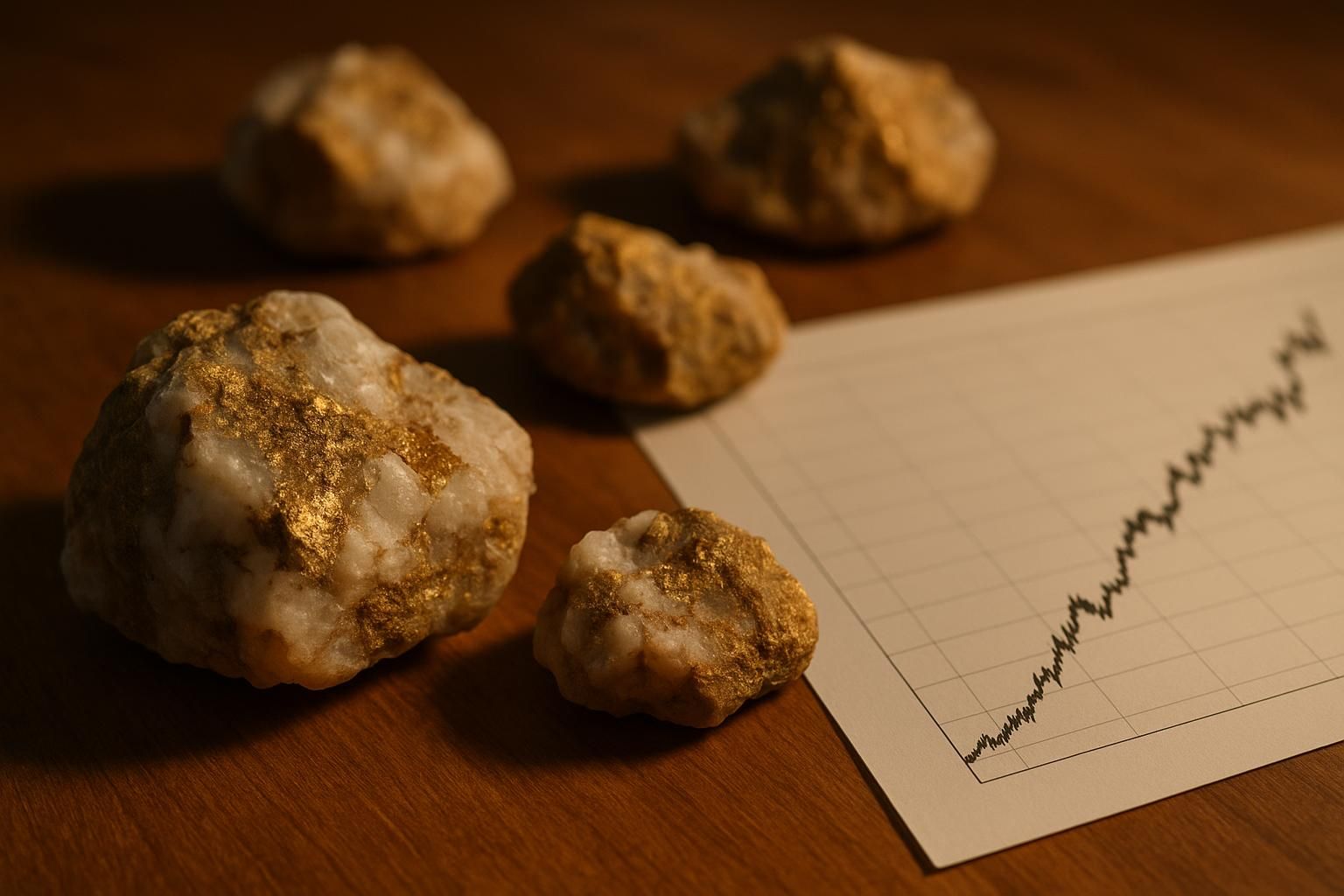
Junior gold miners are the lottery tickets of the gold market. A junior is a small company, often with a market value in the tens of millions, whose business is to find a gold deposit and prove it up, not to operate a mine. Most never will. The sector exists because the majors need somewhere for discoveries to come from, and the juniors exist to take the wild geological risk the big companies would rather buy later than run themselves.
What a junior actually does
A typical junior stakes or options a piece of ground, raises money by issuing shares, and spends it on exploration: mapping, sampling, and drilling. If the drilling hits, the company defines a resource, publishes studies, and either builds toward a mine or, far more often, sells or partners the project to a larger company. If the drilling misses, and it usually does, the company either moves to a new project or quietly fades. This is a business model built on repeated, expensive attempts at a low-probability outcome.
Dilution is the defining risk
Here is the mechanic that catches new investors. A junior has no revenue, so the only way it funds exploration is by selling new shares. Every raise increases the share count, and each existing share becomes a smaller slice of the company. A junior can drill for years, keep its share price flat, and still leave early shareholders with a fraction of the ownership they started with. When you evaluate a junior, the share count over time tells you as much as the drill results. A company that has quadrupled its shares outstanding to fund the same unproven project is a warning, not a bargain.
- Shares outstanding
- Track the trend; heavy dilution erodes any discovery
- Cash on hand
- How many months of drilling before the next raise
- Drill results
- Actual assays with grade and width, not summaries
- Management record
- Have they ever made a discovery or built a mine
- The project
- Is there a real geological thesis or just acreage
Why anyone bothers
The reward side is genuine. A junior that makes a real discovery can rise many times over, because it went from a geological idea to an asset a major will pay for. A single discovery can return more than an entire portfolio of producers. That asymmetry, small downside per position against a large potential gain, is the draw. The problem is that the odds of any one junior succeeding are poor, so the sector rewards a spread-bet approach and punishes concentration.
In a junior, the drill result makes the headline and the share count makes the return.
The promotion problem
Because a junior's currency is its own stock, its incentive is to keep the share price up so the next raise is cheaper. That makes the sector a magnet for promotion: glossy presentations, a steady drip of upbeat news, and language that makes an early target sound like a mine. Learning to separate real progress from noise is the skill that matters. We cover the tells in investor relations at junior miners, and the numbers behind the story in reading a junior miner's financial reports.
How to approach the sector
If you play juniors at all, treat them as speculation, not investment. Size positions small, expect most to fail, and look for the rare combination that tilts the odds: a credible geological thesis, a management team that has found or built something before, a manageable share count, and enough cash to reach a real drill result without an emergency raise. For the safer end of gold-sector exposure, see our guide to gold mining stocks. None of this is investment advice; juniors are among the riskiest equities in any market.
Related Coverage

Gold Mining Stocks: A Practical Guide for 2026
Producers, developers, and explorers behave nothing alike. A framework for telling them apart before you buy.

How OTC Gold Mining Stocks Actually Work
Penny-stock explorers trade over the counter, not on the big boards. The plumbing matters more than most buyers realize.

How to Read a Junior Gold Miner's Financial Reports
No revenue, steady losses, and a cash runway measured in quarters. For an explorer, that can be normal. Here is what to check.

Investor Relations at Junior Miners: Signal vs Noise
A steady drip of upbeat news releases is not the same as progress. How to separate real milestones from promotion.