Mining Plans of Operation and the BLM Permitting Path
Before a drill turns on public land, the paperwork starts. A plain look at notices, plans of operation, and the review that follows.
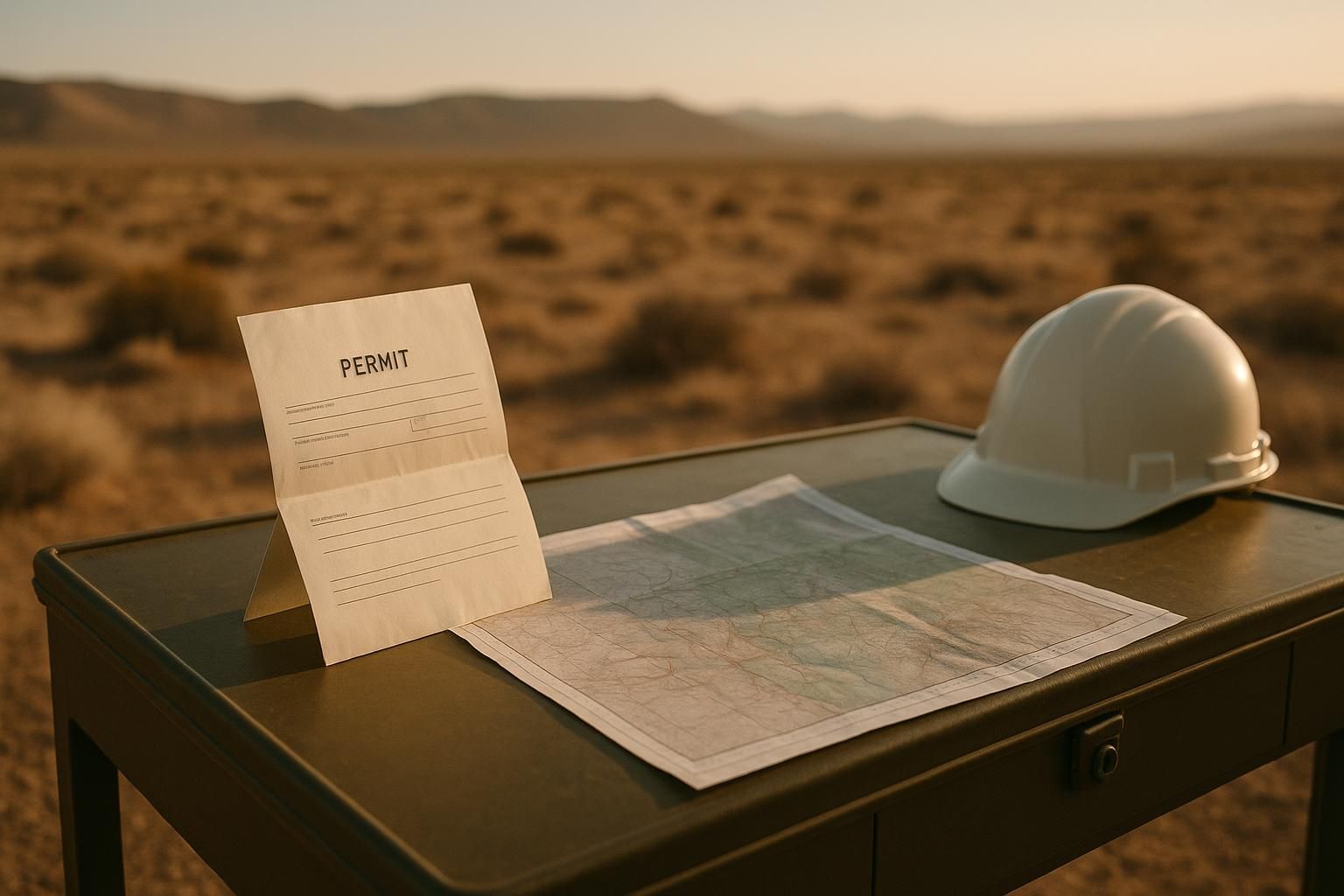
A mining claim gives a company the right to explore, but it does not let it start moving earth whenever it likes. Any real work on federal land, from a serious drilling program to building a mine, runs through a permitting process managed chiefly by the Bureau of Land Management. For investors, the permitting stage is where optimistic timelines meet federal reality, and it is one of the most underestimated risks in the exploration business.
Notice versus plan of operations
The BLM sorts surface-disturbing activity by scale. Smaller exploration work that disturbs under five acres generally proceeds under a notice, a relatively light filing that lets modest programs move quickly. Anything larger, and any actual mining, requires a plan of operations: a detailed submission covering what the company will do, how it will protect the environment, and how it will reclaim the site afterward. The plan triggers a heavier review, and that is where months, sometimes years, disappear.
Reclamation bonding
Before ground is disturbed under a plan, the operator must post a reclamation bond: money set aside to guarantee the site will be cleaned up and restored if the company walks away or fails. The bond can be substantial, and for a cash-strapped junior it is a real hurdle, another call on money that could otherwise fund drilling. Bonding is a feature of the system, meant to keep taxpayers from paying to clean up abandoned sites, and it shapes what a small company can realistically afford to do.
- Notice
- For exploration disturbing under five acres; lighter and faster
- Plan of operations
- For larger work and mining; detailed review and approval
- Environmental review
- NEPA analysis, which can mean an EA or a full EIS
- Reclamation bond
- Money posted up front to guarantee cleanup
The environmental review
A plan of operations pulls in the National Environmental Policy Act, or NEPA, which requires the government to study the environmental effects before approving a major action. Depending on the scale and sensitivity, that can mean a shorter environmental assessment or a full environmental impact statement, the latter taking years and inviting public comment and, often, litigation. This is the stage where projects stall, where opposition organizes, and where a company's timeline can slip well beyond what its early news releases promised.
The claim is quick and cheap. The permit is slow and expensive, and it is where many promising projects quietly stall.
Why permitting is a real risk
Investors focused on geology often treat permitting as a formality. It is not. A project can have genuine gold and still be delayed for years or blocked outright by environmental review, litigation, or local opposition, and the burden is heavier in some states than others. Jurisdiction matters here as much as it does for taxes: the same deposit is worth more where the path to a permit is clearer. When you assess a project, ask where it sits in the permitting process, not just what the drill found.
Following the paper trail
Permitting is a matter of public record. The Bureau of Land Management publishes information on notices, plans of operations, and NEPA reviews, and a company's own filings should disclose its permitting status. Read that status as carefully as the drill results. For the claims that come before the permit, see unpatented lode and placer claims explained, and for the field work a permit enables, see what a junior drilling program involves. This is educational analysis, not legal or investment advice.
Related Coverage
Twin Peaks: A Gold-Silver Exploration Story in Yavapai County
An exploration property in Arizona's Eureka Mining District, near Bagdad, has drawn small-cap attention for years. What the ground actually holds.
Picacho-Salton: Gold on the Edge of the Mesquite District
A cluster of lode and placer claims in Imperial County sits beside one of California's few operating gold mines. Geography is doing a lot of work here.
Reading a Phase 1 and Phase 2 Gold Drill Report
Grams per tonne, intercept width, true thickness. A short guide to the numbers a drill program actually produces.
What a Junior Gold Drilling Program Actually Involves
From claim maps to core boxes, a drilling campaign is slower and more expensive than a news release makes it sound.