Physical Gold vs Mining Stocks: Which Belongs in a Portfolio
They are not the same trade. One is insurance, the other is a geared bet on the people who dig it up.
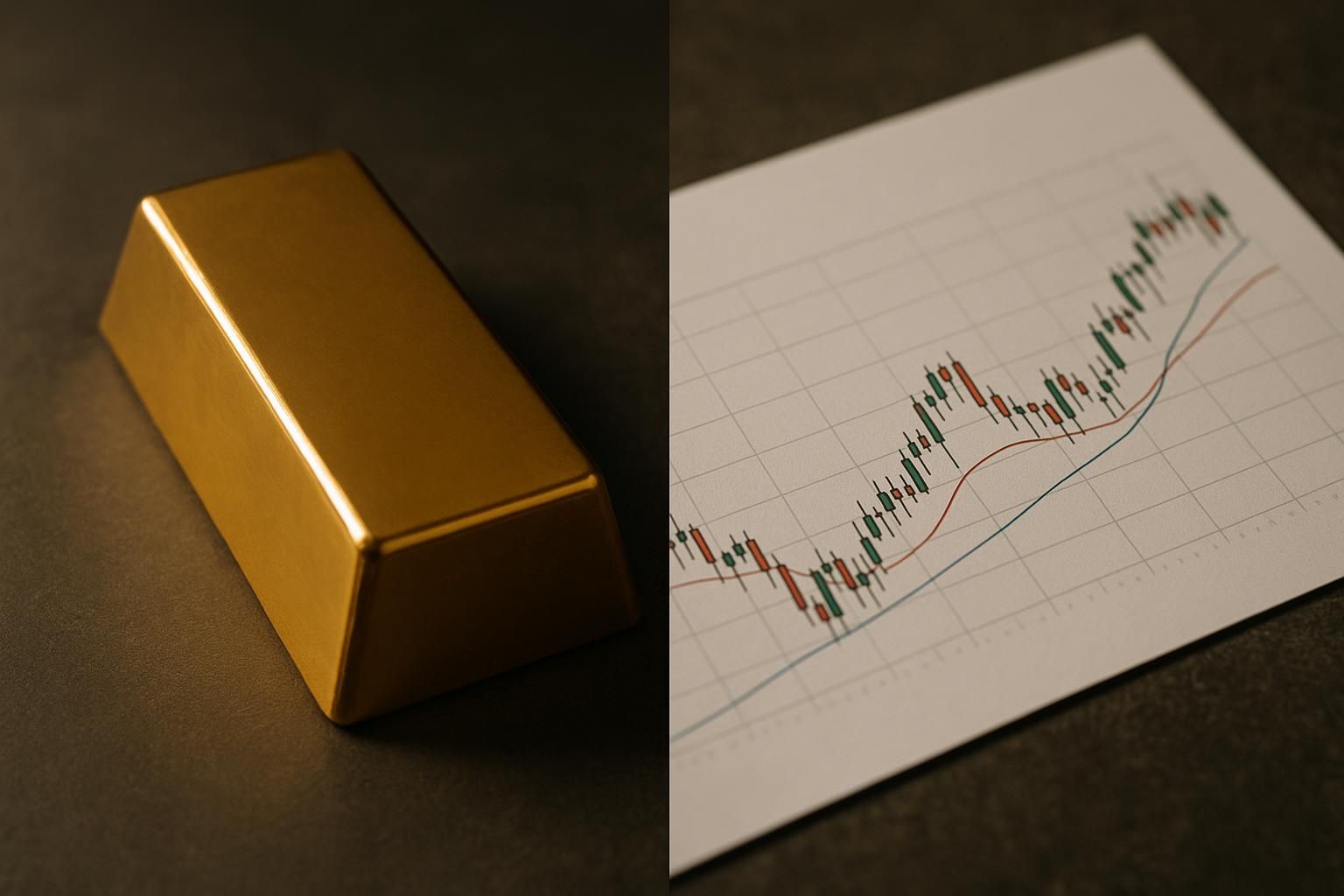
Investors who decide they want exposure to gold quickly hit a fork: buy the metal itself, or buy the companies that mine it. They sound like the same trade. They are not. Physical gold and mining stocks respond to the gold price in very different ways, carry different risks, and do different jobs in a portfolio. Owning one is not a substitute for understanding the other.
Physical gold: insurance you can hold
Physical gold, in bars or coins, is the purest form of the trade. You own the metal outright. It has no counterparty, cannot go bankrupt, and does not depend on anyone's management or balance sheet. Its price moves with the gold price and nothing else. That simplicity is the whole point: physical gold is insurance, an asset that holds value when other things fail.
The trade-offs are practical. Gold pays no income, so it just sits there. It costs money to store and insure. And you buy and sell it at a spread over the spot price, wider for coins than for large bars, which is a cost every time you transact. For the case for owning it at all, see is gold a good investment.
Mining stocks: gearing on the metal
A gold miner is a business that sells gold. Because its costs are relatively fixed while its revenue rises and falls with the gold price, a miner's profits are geared to the metal. When gold rises, a well-run producer's earnings can rise much faster, and its stock can outrun bullion. That gearing is the reason to take mining risk instead of just buying the metal.
But a mining stock adds every risk that comes with running a company: operational failures, cost inflation, debt, bad management, political and permitting problems, and the constant dilution risk at smaller companies. You can be completely right about gold and still lose money on a miner that floods a shaft, overpays for an acquisition, or dilutes its shareholders to death. We break the categories down in the gold mining stocks guide.
- Physical gold
- No counterparty, no income, tracks spot, insurance role
- Mining stocks
- Geared to gold, plus company and operational risk
- Physical costs
- Storage, insurance, and dealer spreads
- Stock risks
- Management, debt, jurisdiction, dilution
They can move apart
The catch that surprises new investors: miners and metal do not always move together. There have been long stretches where gold rose and mining shares lagged, dragged down by rising costs, disappointing operations, or investors simply preferring the metal. Buying miners because you are bullish on gold only works if the companies convert a higher gold price into higher profits, and they do not always manage it.
Physical gold is a bet on gold. A mining stock is a bet on gold and on the people who dig it. Only one of those depends on management.
Which belongs in a portfolio
For most investors the honest answer is that they do different jobs, so the question is not either-or. Physical gold or a low-cost gold ETF is the insurance slice: a small, stable allocation meant to hold up in a crisis. Mining stocks are an active, higher-risk position for an investor who wants geared exposure to a gold bull market and is willing to take company risk to get it. One is defense, the other is offense. Sizing them the same way is the mistake. None of this is investment advice, and both carry real risk of loss.
Related Coverage

Gold Price Outlook for 2026: What the Bull Case Rests On
Record central-bank demand, a softer dollar, and thin new supply have kept a floor under gold. Here is what still has to hold.

Central Bank Gold Buying and the New Demand Floor
Official-sector purchases have topped a thousand tonnes a year for three straight years. That changes how the whole market sits.

Gold Mining Stocks: A Practical Guide for 2026
Producers, developers, and explorers behave nothing alike. A framework for telling them apart before you buy.
Is Gold a Good Investment Right Now?
Gold pays no yield and does nothing but sit there. That is the point, and also the catch. A clear-eyed look.